The birth of a project
The story of RHODANUS
The Roman river
Two thousand years ago, the Rhône was a highway of wine. Millions of terracotta amphorae travelled up the current toward Arelate — today's Arles — a hub of trade between the Mediterranean and Gaul.
Rhodanus, the name of the river
Rhodanus is the ancient name of the Rhône — one of the great commercial arteries of the ancient world. Born of the Alpine glaciers, it crossed Lake Geneva before losing itself in the Mediterranean through a vast delta. Its very name fed legends: some traced it to merchants from Rhodes, others read in it a Gaulish word — the impetuous one, the violent judge of the waters. It is this river, laden with two thousand years of trade and stories, that RHODANUS chose for its cradle.
2011 — the discovery
From the riverbed a Roman barge is raised, buried under nine hundred cubic metres of silt. Among a hundred thousand objects, a tiny jug sealed with pitch: the sample of a grand cru, once presented to a merchant on the port of Arles.
ALB · VALERI · PROCVLI — the sample of an Albanum, a grand cru from the Alban Hills.
The first cellar
The Ancients knew it: great wine takes time, sheltered from light and heat. The amphorae that sank rested at the bottom of the Rhône, in the cold and the dark. The river, without knowing it, was the first cellar.
To do deliberately what the river long did by accident.
The RHODANUS project
From this intuition Rhodanus was born — from the Latin name of the Rhône. To give the wine the riverbed for a cellar, and to make of each amphora an object raised from the depths.
The choice of grape
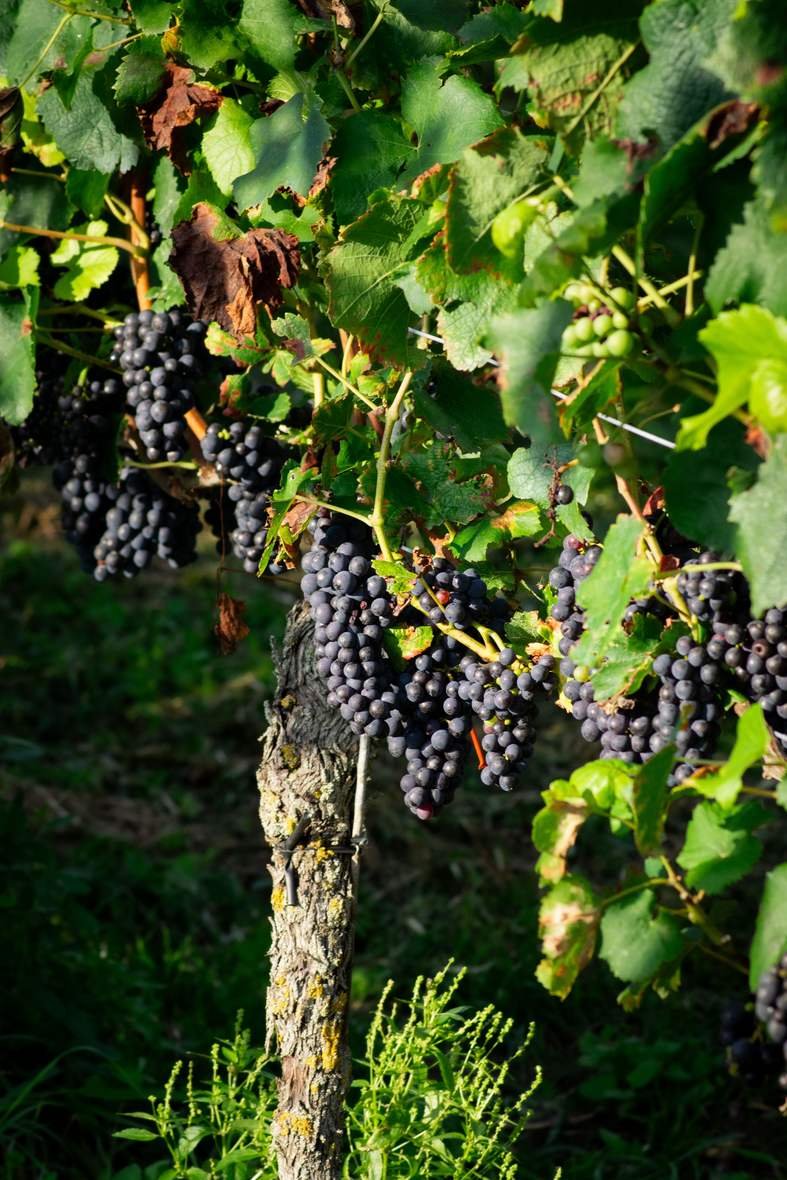
The wine remained to be chosen. It had to be from here, from the Rhône corridor. Our first cuvées draw on two legacies: the solar power of the Côtes-du-Rhône, and the sand wines of the Camargue delta — those gris de gris born of ungrafted vines, which resisted phylloxera where almost everything else fell. A wine of the Rhône, to sleep in the Rhône.